Text Annotation
BASICS
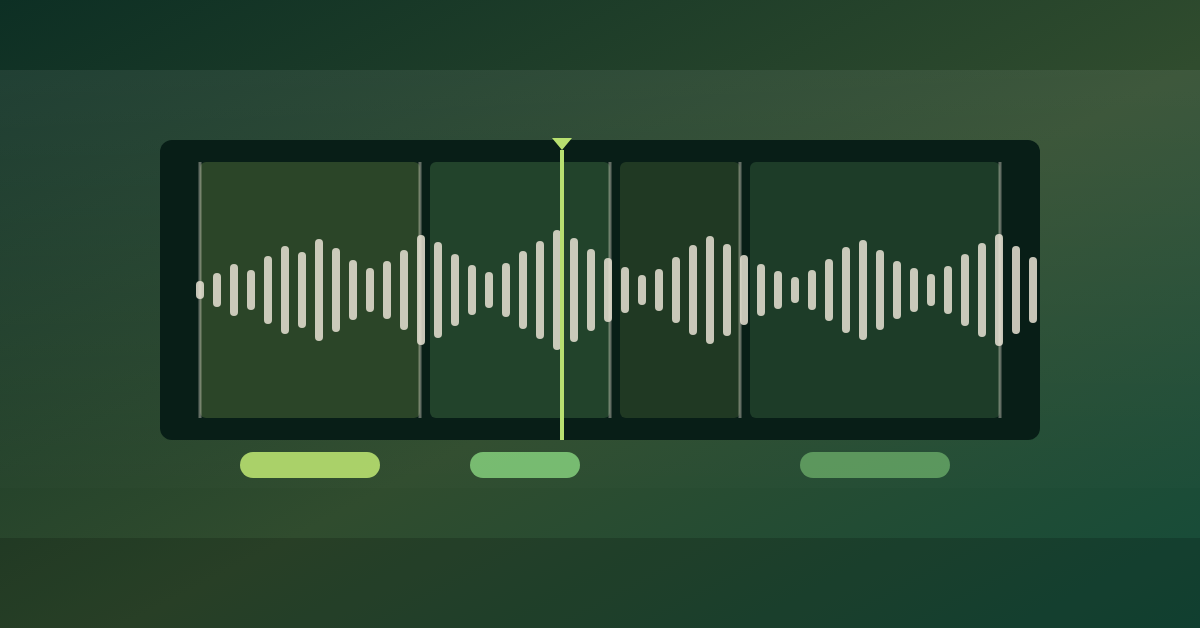
Teach AI to read. Mark what a sentence means, who it mentions and what the writer wants: the skill behind every chatbot.
View course
DeeLab Academy's free, always-open entry point into data annotation. Self-paced theory and examples, knowledge checks, and a final assessment per module.
Optional verifiable certificate per module for a small fee.
What You'll Learn
6 hands-on modules covering the full spectrum of professional data annotation. Each module earns its own certificate.
BASICS
Teach AI to read. Mark what a sentence means, who it mentions and what the writer wants: the skill behind every chatbot.
View courseBASICS
Draw your first bounding box and label what you see. How ordinary photos become training data for computer vision.
View courseBASICS
Follow a moving object frame by frame and name the action. This is how video AI learns what happening looks like.
View courseBASICS
Turn sound into data: transcribe speech, tag who is talking and label the noises in between, all from your own headphones.
View courseBASICS
Colour an image pixel by pixel until a machine can tell road from sky. Segmentation, from your first mask.
View courseBASICS
Work in three dimensions: fit boxes around cars in laser-scanned streets and see how robots learn depth.
View courseReal feedback from professionals who completed this programme.
“Good for absolute beginners!”
Everything you need to know about this programme.
The programme is free, self-paced and open to anyone curious about how AI training data is built. No prior AI knowledge or coding experience is needed. It works well for complete beginners testing whether data annotation is the right career direction, for people in adjacent fields (writing, customer support, content moderation, transcription) who want a structured introduction, and for anyone who has wondered what actually goes into training the AI products they use every day.
The Basics programme is self-paced learning on our e-learning platform: structured theory lessons and online knowledge assessments. It does not include hands-on work in labelling tools. There is no access to annotation software such as Label Studio or CVAT and there are no datasets to download, so there is nothing to install and nothing to buy. All you need is a standard laptop with a modern browser. Hands-on practice with production labeling tools begins in the paid Certified Data Annotator (CDA) Essentials courses.
You will understand the core conventions of data annotation in each module: the main annotation types, what separates a clean label from a sloppy one, and how annotation quality is judged. You will also come away with a clear sense of whether data annotation suits you, and which domain you enjoy most. The Basics programme builds this foundation through self-paced theory and online knowledge assessments; it does not give access to labeling tools, so hands-on, tool-based annotation work to production standards is reserved for the paid Certified Data Annotator (CDA) Essentials courses. The programme grows over time as new Basics-level courses launch.
Yes. Data Annotation Basics is fully online and self-paced, and you can join from anywhere in the world. There is no fixed schedule: start when you are ready, work at your own pace, and pick up where you left off whenever you have time.
The programme is free to enrol and study, including each module’s assessment. Claiming a verifiable certificate is optional. If you choose to claim it, there is a small fee per certificate. Many people take the programme purely as a self-test of fit and skill; others claim the certificate to share with employers or include in a CV.
No. This programme teaches skills and gives you a certificate when you pass. It does not place you in work or guarantee income.
You have one year to complete the programme, counted from the day you sign up. Within that window every course is self-paced and always open; your progress is saved automatically and you can return whenever suits you.
From the blog