“Had a good understanding of audio classification, transcription, speaker diarization, sound event detection and also to distinguish between correct and incorrect audio annotation.”
Data Annotation Basics
Audio Annotation BASICS
Turn sound into data: transcribe speech, tag who is talking and label the noises in between, all from your own headphones.
Self-Paced
Always Open
Optional Certificate
Part of the Data Annotation Basics programme.
Self-Paced · Always Open
Free
Optional certificate:
Learn at your own pace, with no fixed schedule
Structured self-paced course modules
Theory lessons, examples, and knowledge checks
Optional paid certificate (after passing the assessment)
Overview
Start your Audio Annotation journey.
Audio labeling is the only annotation modality where being a fluent speaker of a less-supported language is its own market.
The work is listening, not looking: transcribing speech, marking who’s talking and when, tagging the cough or the dog bark or the door slam. Voice assistants, podcast moderation, transcription products, and music understanding all need this kind of data — and the native-speaker edge is real.
This Basics course covers the conventions: audio classification, transcription, speaker diarization, and sound event detection. Self-paced theory and knowledge checks; no fixed schedule.
Part of the Data Annotation Basics learning track. Optional verifiable certificate available for a small fee.
What You Get
What's included in your training
Structured Learning Modules
Learn at your own pace through structured modules on the DeeLab Academy learning platform.
Self-Paced Schedule
No fixed schedule. Start when you want, finish at your own pace.
Knowledge Checks
Worked examples and per-unit practice quizzes with instant feedback, plus a final knowledge assessment on the e-learning platform (80% to pass).
Optional Certificate
Optional verifiable certificate available for a small fee after you pass the final assessment.
Outline
What you'll learn
-
Audio Classification
What audio classification is and how categories apply to a clip.
-
Transcription
How accurate and consistent transcription captures speech.
-
Speaker Diarization
What speaker diarization marks: who is speaking and when in a recording.
-
Sound Event Detection
How non-speech events get identified and time-stamped (door slams, barks, sirens).
-
Spotting Correct vs Incorrect Audio Annotations
How to recognise the difference between a clean annotation and a sloppy one.
Part of the Data Annotation Basics (DAB) programme.
Success Stories
What our trainees say
Unedited feedback from graduates who completed this course.
“I learnt that you can teach AI!”
“Amazing course!”
“It's worth it!”
“Well developed!”
“Good for absolute beginners!”
Got Questions?
Frequently Asked Questions
Everything you need to know about this course.
It's designed for absolute beginners. No AI knowledge or coding background required. Audio labelling uses different attention muscles than image work (listening rather than looking), so even people new to annotation entirely can start here without prerequisites.
No. The course covers the conventions of audio annotation in general, which apply across languages. Worth noting as honest context: being a fluent native speaker of a less-widely-supported language (any language outside the top 20 or so) is a meaningful market edge in production audio work. Native annotators are paid premium rates for low-resource languages because there aren't enough of them.
Self-paced theory lessons and an online knowledge assessment on the e-learning platform. The Basics tier is focused on understanding the conventions of audio annotation: classification, transcription, speaker diarization, and sound event detection. There is no hands-on work with annotation tools in this course; that comes in the paid Audio Labeling Essentials course.
The course is free, but the certificate is not — claiming it is optional and costs a small fee. It's verifiable proof that you've completed the self-paced course and passed the online knowledge assessment. Useful on a CV or LinkedIn profile as foundation evidence. It does not mean you've been trained to production transcription standards; the paid Audio Labeling Essentials course is the hands-on path toward hireability. Essentials-level courses make up the Certified Data Annotator (CDA) programme.
Two natural directions from here. To broaden your foundation, the Data Annotation Basics (DAB) programme has free courses on image, video, text, segmentation, and 3D point cloud, all at the same level as this one. To go deeper into audio annotation specifically, the paid Audio Labeling Essentials course is the next level up: online sessions with an industry trainer, access to the labeling tools used in production, ongoing support, and a graded final assessment. The Essentials-level courses make up the Certified Data Annotator (CDA) programme.
You have three months to complete the course, counted from the day you sign up. Within that window it is entirely self-paced and always open; your progress is saved automatically and you can return whenever suits you.
From the blog
Related articles
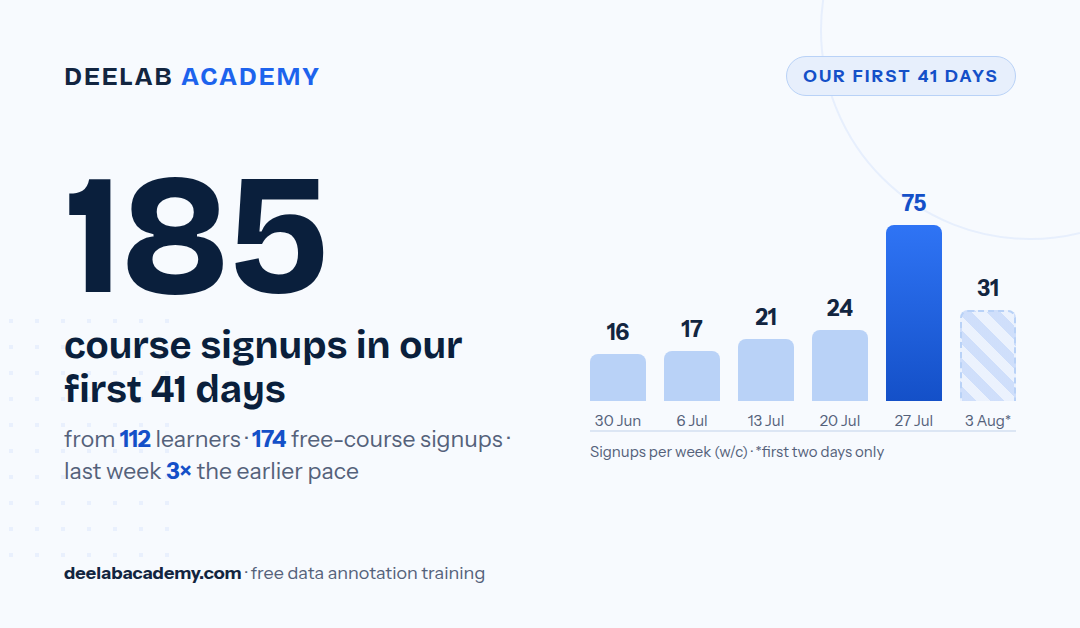
In its first 41 days, DeelabAcademy.com recorded 185 course signups from 112 learners, with weekly signups tripling in late July. Course ratings average 4.78/5 from 136 reviews. A summary of the first month: who signed up, what they took, and what they said.
5 min read · 05 Aug 2026
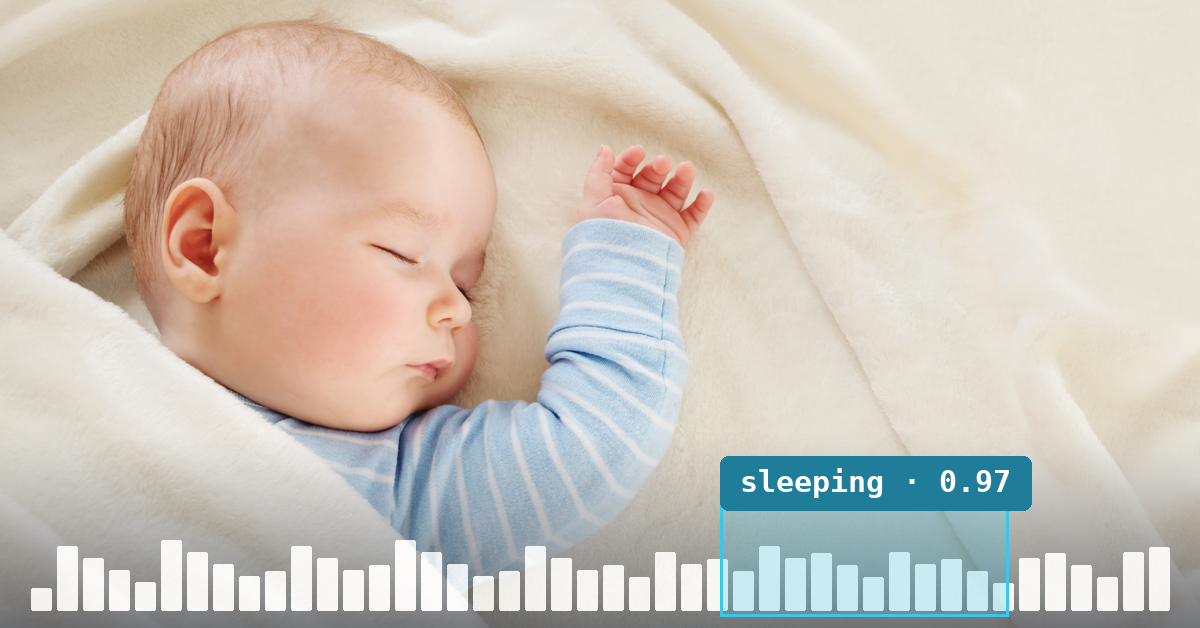
To a computer, sound is just numbers; audio labelling is how humans add the meaning machines learn from. Annotators segment recordings, transcribe speech and tag speakers, emotions and sound events, producing the training data behind voice assistants, captions and smart devices.
5 min read · 19 Jul 2026
Data Annotation Basics is DeeLab Academy's new free programme: six self-paced courses, one for each main type of annotation. Each teaches the principles of its discipline and is the no cost way to learn the field and find which type suits you.
10 min read · 20 Jun 2026
More on these topics
Related Programmes