Audio Labeling: How Machines Learn to Listen

To a computer, sound is just numbers; audio labelling is how humans add the meaning machines learn from. Annotators segment recordings, transcribe speech and tag speakers, emotions and sound events, producing the training data behind voice assistants, captions and smart devices.
What audio labelling is
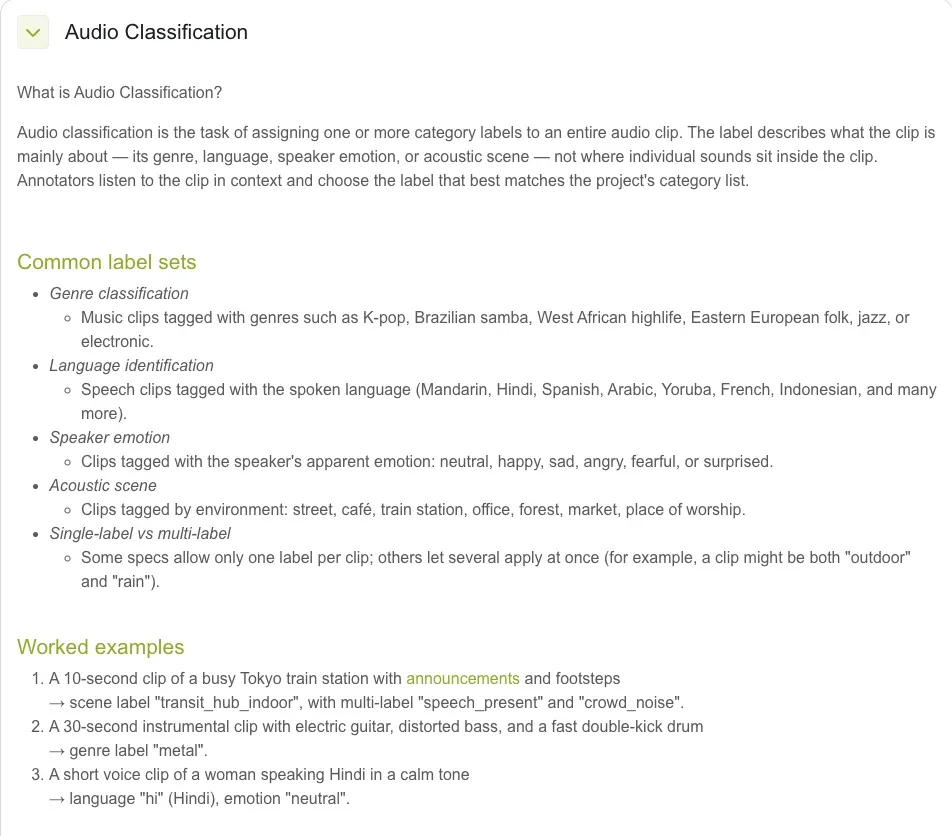
Audio labelling (also called audio annotation) means listening to recordings and attaching information that a model can learn from. Depending on the project, an annotator might mark:
- where speech starts and stops in a recording
- who is speaking in each segment
- the exact words spoken, as text
- what a non-speech sound is: an alarm, footsteps, breaking glass
- the tone of a speaker: calm, frustrated, uncertain
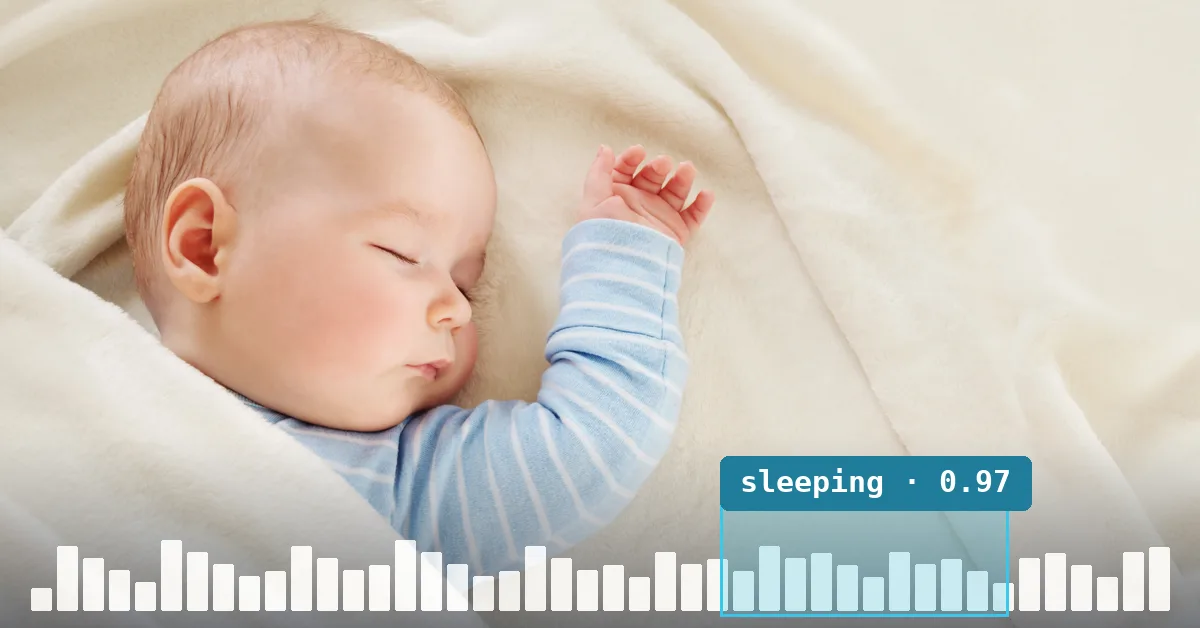
Give a model enough of these examples and it starts to generalise. It learns what crying sounds like across thousands of different babies, or what "yes" sounds like in dozens of accents. A model trained on careless labels mishears the world. That is the whole reason this work exists, and why it is done by people rather than left to software alone.
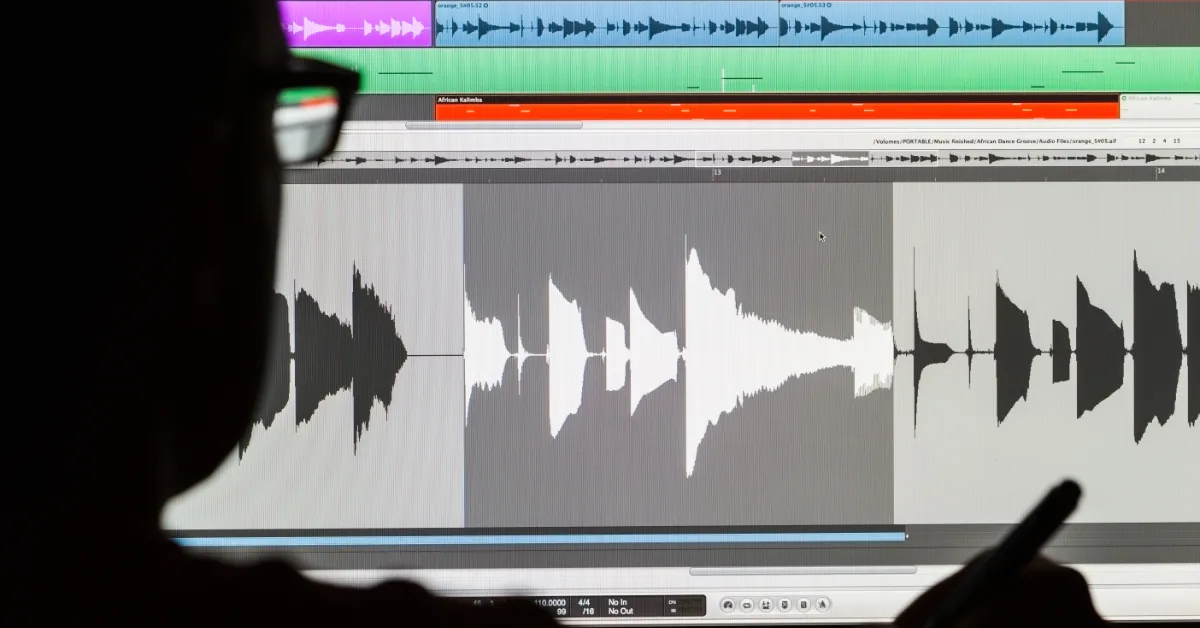
Most projects begin with segmentation: breaking long recordings into usable pieces, by speaker or by sentence. It sounds mechanical, but real audio rarely has clean boundaries. Two people talk at once, or speech runs over background music, and the annotator has to decide where one piece ends and the next begins.
From there, the labelling itself depends on what the model needs to learn. Transcription turns spoken words into text; usually speech recognition software produces a first draft and the annotator corrects it, because software still struggles with noise, strong accents and people interrupting each other. Speaker labelling tags who is talking (how a smart speaker loads your playlists rather than your housemate's) or verifies that a voice belongs to who it claims to, which is the basis of voice security.
Event detection marks when specific sounds occur: a siren, a gunshot, a machine bearing that has started to whine. Emotion annotation tags the tone of speech, since the same sentence can be a compliment or a complaint depending on how it is said. And environmental classification labels the acoustic scene itself, whether rain, traffic or a crowded café.
Working alongside AI
Increasingly, the annotator is not starting from a blank file at all. A model pre-labels the audio and the human reviews it, fixing wrong labels, adjusting timestamps, catching what the model missed. Those corrections go back into training, so the next batch arrives in better shape. Over time the software handles more of the routine work, and the human effort concentrates on the cases that need judgement: dialects, sarcasm, overlapping voices, ambiguous sounds. Human review is also what catches bias, for instance a model trained mostly on one accent that quietly fails everyone else.
The work happens in annotation platforms that display sound as a waveform and let you mark time regions and attach labels to them. Common choices include Label Studio, Labelbox and Praat. Most annotators are productive in a new platform within days; the listening and the judgement are what transfer.
Where the labels end up
Voice assistants learned to handle different accents and noisy rooms from annotated speech. Automatic captions and dictation tools are trained on corrected transcripts, and they also make audio content usable for deaf and hard-of-hearing audiences.
Call centres use emotion and keyword labels to flag conversations that need attention. In healthcare, models that detect abnormal breathing or coughs start from clinically annotated recordings. In factories, labelled machine audio helps predict equipment failure before it happens.

One example from our own work: our parent company DeeLab annotated the training data for an AI baby monitor. The client wanted a device that could tell parents what it was hearing, not just that it was hearing something. Over four months, four annotators worked through 34,489 audio files, about 100 hours of recordings, labelling events such as baby cry, baby coos, parent talking, breathing and movement, and background sounds like footsteps and barking dogs.
Much of the effort went into edge cases: a cry cut off by another sound, or buried in a noisy room. Every file passed a two-step review, first by the annotator, then by a separate QC team working from shared guidelines. The finished monitor distinguishes a cry from a cough from a barking dog, and alerts parents accordingly.
 Related article
What Makes a Great Data Annotator? The Skills, Tools and Mindset Behind Certified Quality
Technical skills matter, but the best annotators bring something more — a rigorous mindset, a questioning approach, and genuine respect for the craft of precise...
Read more →
Related article
What Makes a Great Data Annotator? The Skills, Tools and Mindset Behind Certified Quality
Technical skills matter, but the best annotators bring something more — a rigorous mindset, a questioning approach, and genuine respect for the craft of precise...
Read more →
What the work asks of you
You do not need musical training or a technical degree. What matters is attentiveness: noticing that a segment contains two events rather than one, or that the speaker changed mid-sentence. Consistency matters even more, because a dataset is only useful if thousands of small decisions were made the same way every time. Familiarity with accents and code-switching helps, particularly in a region like Southeast Asia. And since the job means repeated close listening, pacing yourself is part of doing it well. Tired ears make inconsistent labels.
Be ready for the messy parts too. Real-world audio is recorded in kitchens, cars and streets, not studios. Emotion labels invite disagreement, which is why teams calibrate regularly, and some files are simply too poor to label at all. The best annotators ask questions when a case does not fit the guidelines, rather than guessing, and the guidelines improve as a result.
Learning it
If you want to try audio labelling, our self-paced Audio Annotation Basics course is free. The five-day, instructor-led Audio Labeling Essentials course goes further, with hands-on segmentation, transcription, event detection and emotion annotation using real tools and real audio. For the full annotation skill set across image, video, text and 3D, there is the Certified Data Annotator programme, which ends with a certificate that employers can verify online.
 Related course
Audio Labeling Essentials
Train your ear for speech transcription, sound event detection and speaker diarization in voice AI projects.
Read more →
Related course
Audio Labeling Essentials
Train your ear for speech transcription, sound event detection and speaker diarization in voice AI projects.
Read more →
Free newsletter
Data annotation insights, straight to your inbox
Career guides, industry news, and practical tips — sent only when worth your time. No spam.
Kari is the founder of DeeLab and also the founder & CEO of Tailjay, a Singapore-based venture builder operating globally. At DeeLab, Kari leads a growing team of professionals focused on high-quality data annotation and project-based su...
Ready to level up?
Explore our data annotation courses
Put these insights into practice with hands-on training built for aspiring data annotators and AI teams.
Explore related topics
Related Programmes