Image Annotation: How Humans Teach Machines to See

Image annotation turns ordinary pixels into training data machines can learn from. Here's what it is, where it's used, the skills and tools it takes — and how to get certified at DeeLab Academy.
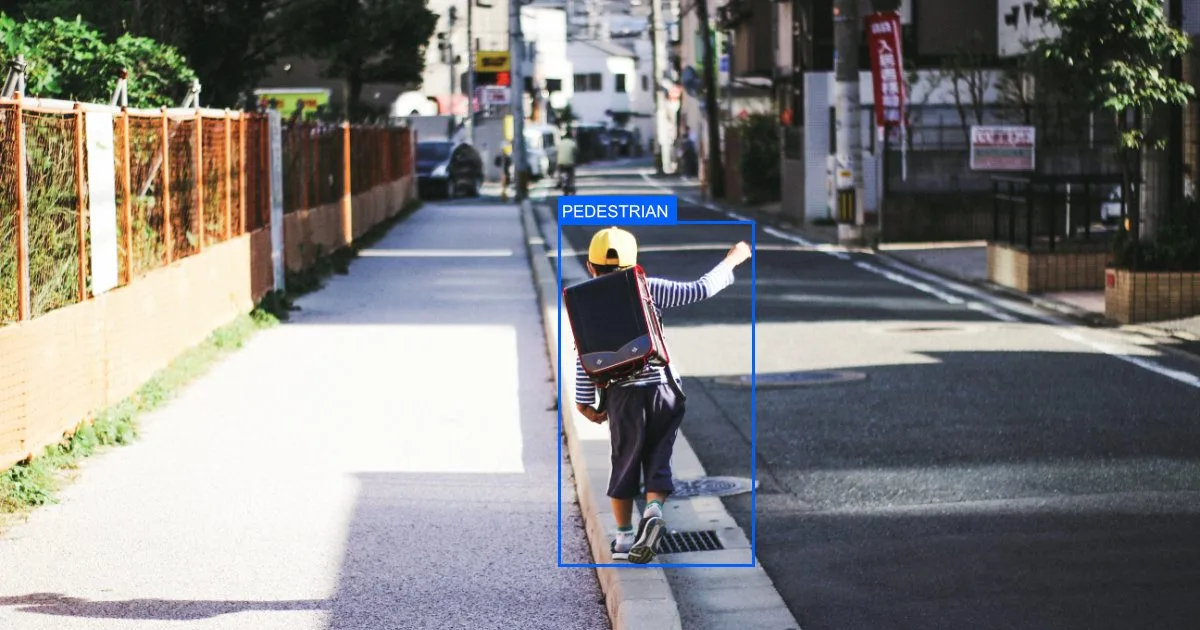
A self-driving car slows for a child stepping off a curb. A radiologist's screen flags a shadow on a lung scan. A recycling plant's robotic arm plucks a plastic bottle off a moving belt. None of these machines were born knowing what a child, a tumour, or a bottle looks like. Somebody had to show them — thousands of times, one carefully labeled image at a time.
That "somebody" is an image annotator, and the work they do is called image annotation (or image labeling). It's one of the quietest, most foundational jobs in artificial intelligence — and one of the most learnable. This article walks through what image annotation actually is, where it powers the technology around you, the skills and tools that make a good annotator, and how you can train for it.
 Related article
A Day in the Life of a Data Annotator
What does it actually look like to work as a data annotator? We follow a certified annotator through a full shift — the tools, the decisions, and the craft behi...
Read more →
Related article
A Day in the Life of a Data Annotator
What does it actually look like to work as a data annotator? We follow a certified annotator through a full shift — the tools, the decisions, and the craft behi...
Read more →
What Is Image Annotation?
Image annotation is the process of attaching meaning to visual data — photos, video frames, satellite imagery, medical scans — so that a machine learning model can learn from it. An annotator draws boxes, outlines, points, or pixel masks over the parts of an image that matter and tags them with a label: car, pedestrian, tumour, defect, ripe.
The reason this matters comes down to how most computer vision models learn. They rely on supervised learning — a method where the algorithm is fed examples for which the correct answer is already known, and it gradually learns the patterns that connect input to answer. The labels are those correct answers. Strip them away and the model is just staring at a grid of colored pixels with no idea what it's looking at.
There's an old saying in machine learning: garbage in, garbage out. The annotations an annotator produces become the model's ground truth — the trusted reference it measures itself against. If the labels are sloppy, inconsistent, or wrong, the model inherits every one of those flaws. If they're precise, the model learns to see the world clearly. This is why annotation is far less about "drawing boxes" and far more about judgment.
Image annotation is one branch of the wider discipline of data annotation, which also covers audio, text, video, and 3D sensor data. For a deeper foundation on the visual side specifically, DeeLab's earlier piece Understanding Image Labeling is a great companion read.
The Main Types of Image Annotation
Different problems call for different image annotation techniques. Most professional projects use a blend of them. The five you'll meet most often:
Bounding boxes. A rectangle drawn around an object — the workhorse of object detection. Frame every car on a street and a model learns to spot vehicles on its own. Fast to produce and endlessly useful, which is why bounding boxes remain the most common annotation type in the industry.
Polygon annotation. When a rectangle is too clumsy — an irregular vehicle, an animal, a winding river — annotators trace the object's actual outline point by point. Polygons capture complex shapes that boxes can't, giving the model a much truer sense of where an object begins and ends.
Semantic segmentation. Here every pixel gets a label. Instead of "there's a road somewhere in this box," segmentation tells the model exactly which pixels are road, sky, sidewalk, or person. It's the most detailed — and most labour-intensive — form of image labeling, and it's essential for tasks like scene understanding in autonomous driving and tumour boundary detection in medicine.
Keypoint annotation. Annotators mark specific points — joints, facial landmarks, anatomical features — so a model can understand pose and structure. Think of mapping a dancer's elbows, knees, and hips to teach a system how a human body moves. This is the backbone of pose estimation, gesture recognition, and facial analysis.
Lines and splines. Used for thin, continuous features like lane markings, roads, railways, or rivers. Annotators trace the curve rather than enclose an area — critical for lane-keeping systems and mapping.
In practice these combine. An autonomous-vehicle dataset might use bounding boxes for cars, semantic segmentation for the drivable road surface, keypoints for pedestrian poses, and splines for lane lines — all on the same frame.
 Related article
The 5 Types of Data Annotation Every AI Team Should Know
Image labeling, text classification, bounding boxes, semantic segmentation, audio transcription — annotation covers far more ground than most people realise. He...
Read more →
Related article
The 5 Types of Data Annotation Every AI Team Should Know
Image labeling, text classification, bounding boxes, semantic segmentation, audio transcription — annotation covers far more ground than most people realise. He...
Read more →
Where Image Annotation Is Used
If a machine "sees," annotation almost certainly made it possible. A few of the fields it quietly powers:
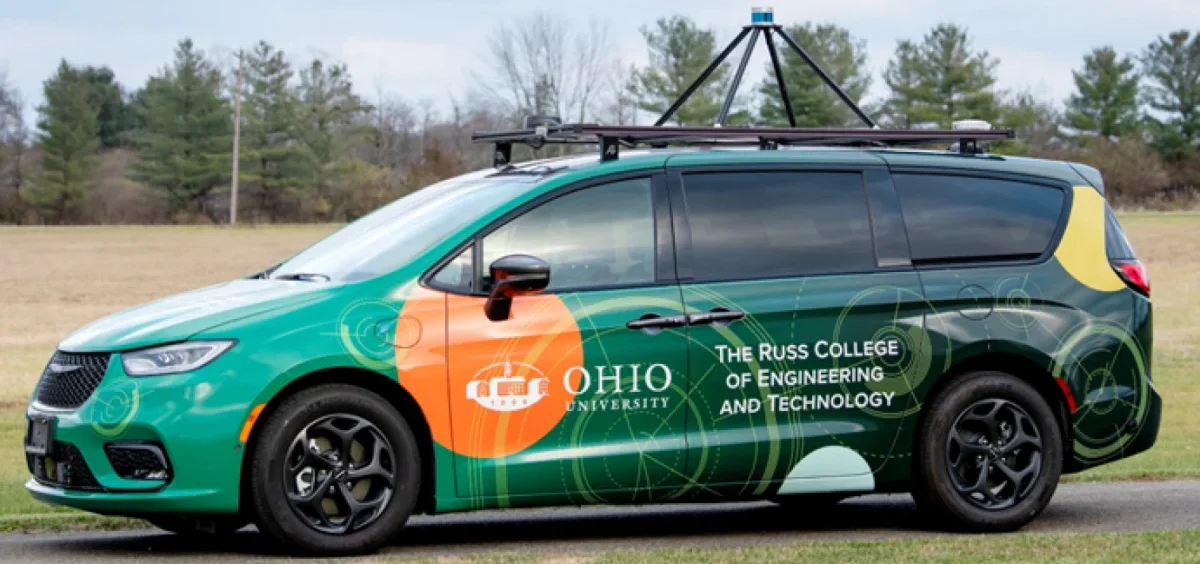
Autonomous vehicles and mobility. Self-driving cars, driver-assistance systems, and delivery robots are trained on millions of annotated frames of streets, signs, pedestrians, and other vehicles. The precision of those labels translates directly into safety.
Healthcare and medical imaging. Annotated X-rays, CT scans, and pathology slides teach models to flag tumours, fractures, and other anomalies — sometimes catching details a human eye might miss. Research using YOLO-based detectors for melanoma detection is one striking example of where this is heading.
Agriculture. Drones and ground cameras feed annotated imagery to models that count crops, spot disease, monitor livestock, and guide precision spraying.
Retail and manufacturing. Annotated images drive automated checkout, shelf-stock monitoring, and visual quality inspection that catches defects on a production line faster than any human inspector.
Sustainability and recycling. Object-detection models trained on labeled images let robotic arms identify and sort plastic, paper, metal, and glass on conveyor belts. DeeLab's article on Waste Segregation in the Age of AI digs into how companies like AMP Robotics and ZenRobotics are doing exactly this.
Geospatial and disaster response. Labeled satellite and aerial imagery helps map land use, track deforestation, and assess damage after floods, fires, and earthquakes — often when speed saves lives.
This breadth is worth pausing on, because it's also a glimpse of how modern this all is. Object detection was a slow, fragile research problem for decades — from edge-detection experiments in the 1960s, through the breakthrough Viola-Jones face detector in 2001, to the deep-learning explosion that gave us R-CNN and the real-time YOLO ("You Only Look Once") family. Every one of those modern systems is hungry for the same thing: large volumes of well-annotated images.
The Skills That Make a Great Annotator
It's tempting to assume annotation is mechanical clicking. The opposite is true — the best annotators bring a genuine craft. The qualities that separate good work from great:
Attention to detail. A box that's a few pixels off, an outline that clips a corner, a missed object in the background — small errors compound across a dataset. Precision is the whole job.
Patience and consistency. Annotators work through hundreds of images while keeping their labeling style identical from the first frame to the last. Inconsistency — even among skilled people — is one of the hardest quality problems in any large project, so disciplined, repeatable habits matter enormously.
Domain awareness. Knowing what you're looking at changes everything. Medical professionals, automotive engineers, agricultural experts, and retail specialists all bring context that helps them label edge cases correctly — a partially hidden object, an unusual angle, a tricky lighting condition.
Judgment under ambiguity. Real images are messy: occlusion, glare, motion blur, objects that are half in frame. Annotators constantly make reasoned calls, and good ones know when to flag uncertainty rather than guess.
Communication. Annotators collaborate with researchers and project leads to clarify guidelines and resolve doubts. The feedback loop between annotator and model-builder is where quality is refined over time.
The encouraging part: these are teachable skills. You don't need a computer-science degree to start. You need to be careful, consistent, willing to learn a tool, and able to follow (and question) a labeling guideline.
 Related article
What Makes a Great Data Annotator? The Skills, Tools and Mindset Behind Certified Quality
Technical skills matter, but the best annotators bring something more — a rigorous mindset, a questioning approach, and genuine respect for the craft of precise...
Read more →
Related article
What Makes a Great Data Annotator? The Skills, Tools and Mindset Behind Certified Quality
Technical skills matter, but the best annotators bring something more — a rigorous mindset, a questioning approach, and genuine respect for the craft of precise...
Read more →
The Tools of the Trade
Annotators work inside specialised labeling platforms, each suited to different annotation types and project scales. The ones you'll encounter most:
- Labelbox — a polished commercial platform with strong project-management and review features, built for large-scale, team-based annotation.
- Label Studio — a flexible open-source tool that handles many data types, popular for its adaptability across project requirements.
- CVAT — the open-source Computer Vision Annotation Tool, widely used for video and image work (you'll often see CVAT screenshots in DeeLab's own examples).
- COCO Annotator, VGG Image Annotator (VIA), and LabelMe — well-known open tools for segmentation and keypoint tasks.
There's no single "best" tool — professional annotators learn to move between several, because different clients and projects standardize on different platforms. Being comfortable in both a commercial environment and an open-source one is a real advantage in the job market.
The Challenges Worth Knowing About
Two tensions sit at the heart of professional annotation, and good training addresses both head-on:
Speed versus precision. Projects want fast turnaround and flawless labels. Learning to be both quick and accurate — not trading one for the other — is a skill that develops with practice and feedback.
Consistency at scale. Across a dataset of thousands of images and often multiple annotators, labels need to look like they came from one careful mind. This is why clear guidelines, peer review, and quality-assurance steps aren't bureaucracy — they're what makes the data trustworthy.
Learn Image Annotation at DeeLab Academy
If reading this has made you curious about doing the work — or about hiring people who genuinely know it — DeeLab Academy was built for exactly that. The Academy trains and certifies the next generation of data annotators with hands-on, industry-relevant courses led by experienced trainers.
The most direct starting point for learning label visual data is Image Labeling Essentials:
- Format: 5 days of interactive, live online sessions
- Tools: hands-on practice in both Labelbox and Label Studio — commercial and open-source, so you're ready for any client environment
- Techniques covered: bounding box (object detection), keypoint (pose estimation), and polygon (image segmentation) annotation, taught with a focus on accuracy, consistency, and efficiency
- Quality process: you submit work after each session and receive individual feedback, plus peer review and group discussion
- Certification: a final practical assessment and an official DeeLab certificate on passing
- Fee: USD 150 (watch for campaign discounts)
DeeLab's first cohort of six trainees all completed the course and passed to become certified — you can read what the training actually looks like, day to day, in Image Annotation Training Highlights.
Ready to go further? The Academy also offers focused certifications in Image Segmentation Essentials and Video Labeling Essentials, and a broader Certified Data Annotator track for those who want to work across data types.
The course suits anyone building a career in AI data annotation, freelancers and contractors looking to upskill, and anyone curious about getting practical, paid-skill experience in a fast-growing field.
The Bigger Picture
Image annotation isn't glamorous, and that's rather the point. It's the patient, human groundwork beneath nearly every system that can "see" — the cars that brake for us, the scans that catch what we'd miss, the robots that sort our waste. Every time AI takes a leap forward, it's standing on a foundation of carefully labeled images that someone, somewhere, produced with care.
Pixels become meaning. Meaning becomes ground truth. Ground truth becomes intelligence. And it starts with an annotator and a well-drawn box.
Want DeeLab to handle annotation for your project instead? Explore DeeLab Image Labeling services. Want to learn the craft yourself? Start with Image Labeling Essentials at DeeLab Academy.

Free newsletter
Data annotation insights, straight to your inbox
Career guides, industry news, and practical tips — sent only when worth your time. No spam.
Kari is the founder of DeeLab and also the founder & CEO of Tailjay, a Singapore-based venture builder operating globally. At DeeLab, Kari leads a growing team of professionals focused on high-quality data annotation and project-based su...
Ready to level up?
Explore our data annotation courses
Put these insights into practice with hands-on training built for aspiring data annotators and AI teams.
Explore related topics
Related Programmes